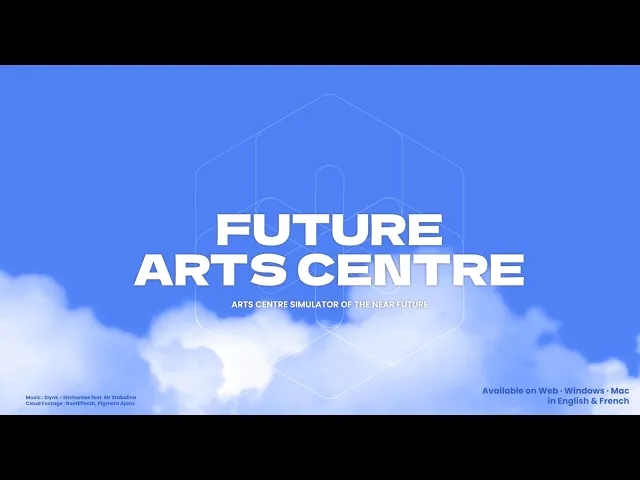
Serious Simulator Game for The Embassy of France in Canada
CATEGORY
Visual
TIMELINE
3 months
INDUSTRY
EdTech
TOOLS
Figma, Unity, Adobe Suites, Miro
💬 Project Overview
🌱 Problem & Opportunity
Problem: Complex simulation required clear communication of decisions and their impact. Players needed to understand how choices affected multiple indicators while staying engaged.
Opportunity: Create a decision-driven interface that guides users through a realistic simulation, supports critical thinking, and showcases the potential of serious games for cultural planning.
⚡️ Challenges:
Presenting complex data clearly and intuitively
Maintaining engagement while supporting learning objectives
Aligning cross-disciplinary teams on UI/UX and technical constraints
👩🏻💻 My Role
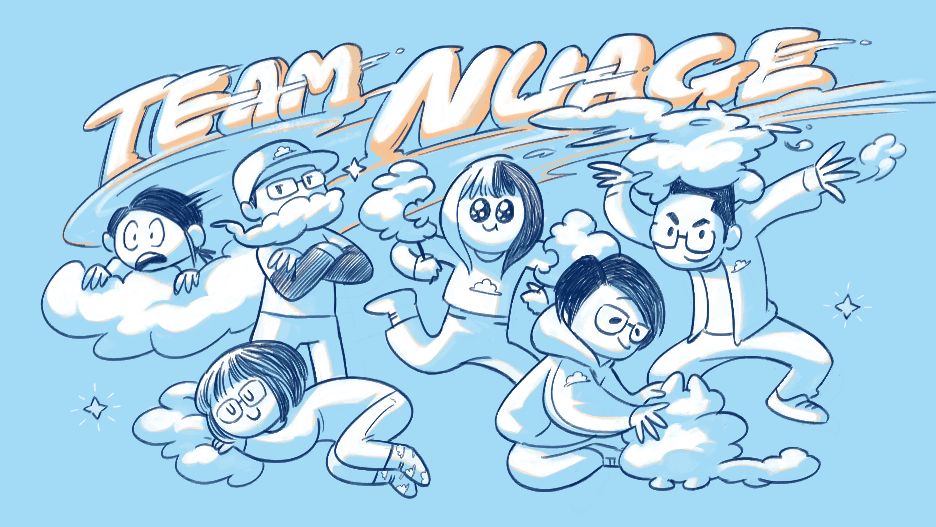
This project was created by Team Nuage, Master Students from Centre for Digital Media:
Chalita Termpaiboon (Me) - UI Artist, UI Technical Artist.
Asher Gao - Game Designer
Jisoo Shin - Project Manager and Visual Designer
Kennedy Kan - 3D Artist
Mars Balisacan - Director and Game Programmer
Sofie Nielsen - Game Programmer
My Responsibilities
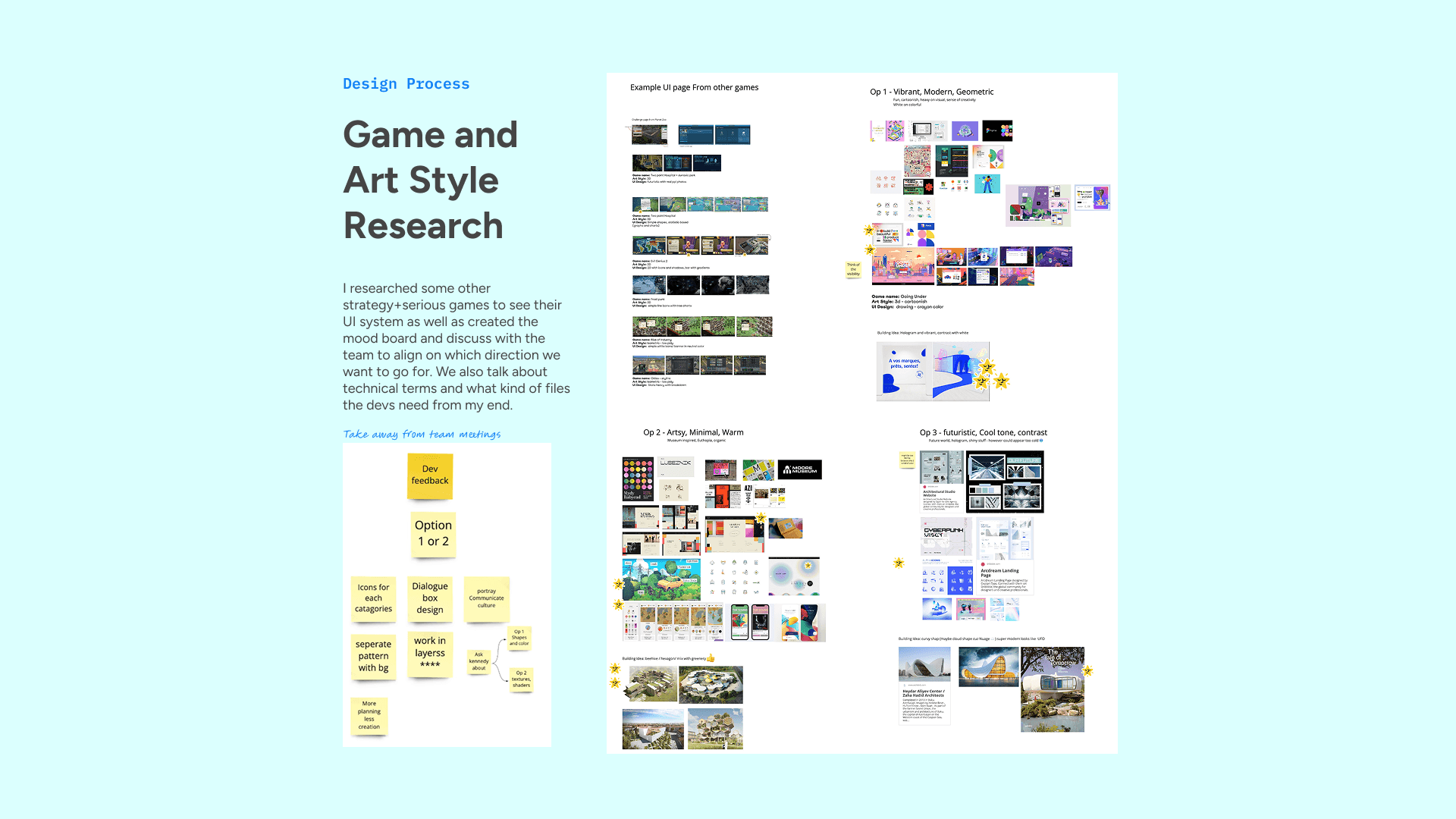
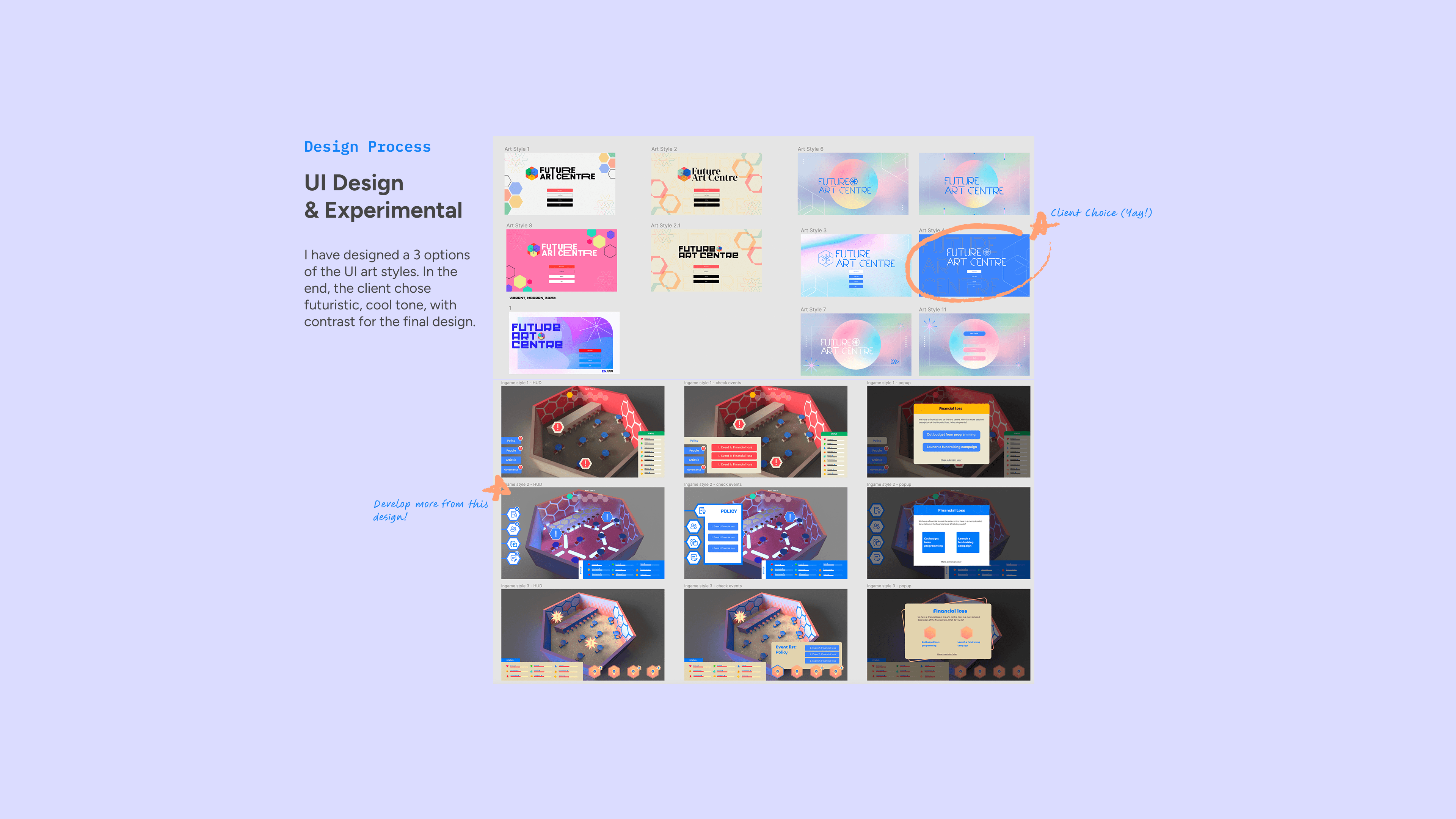
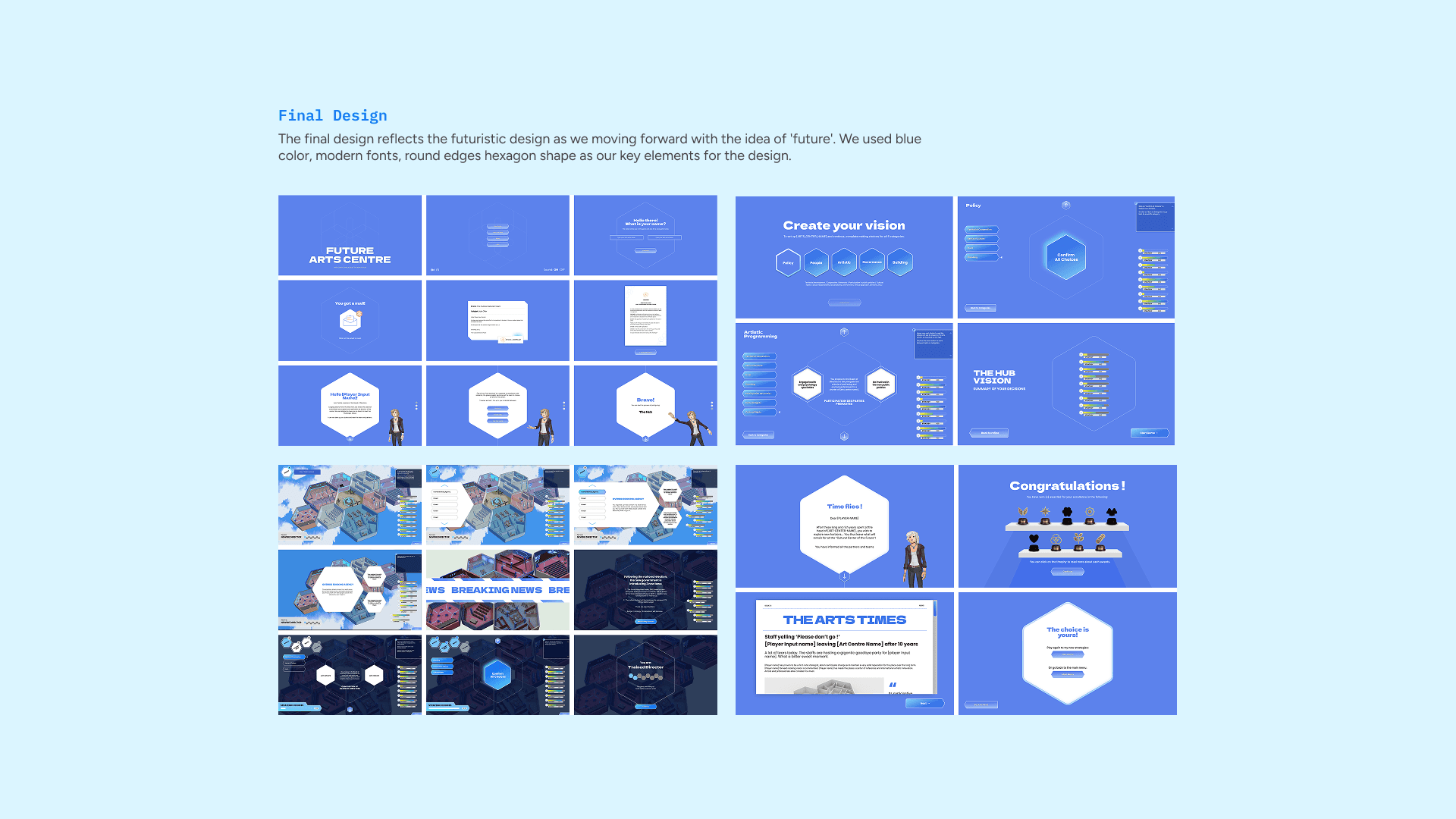
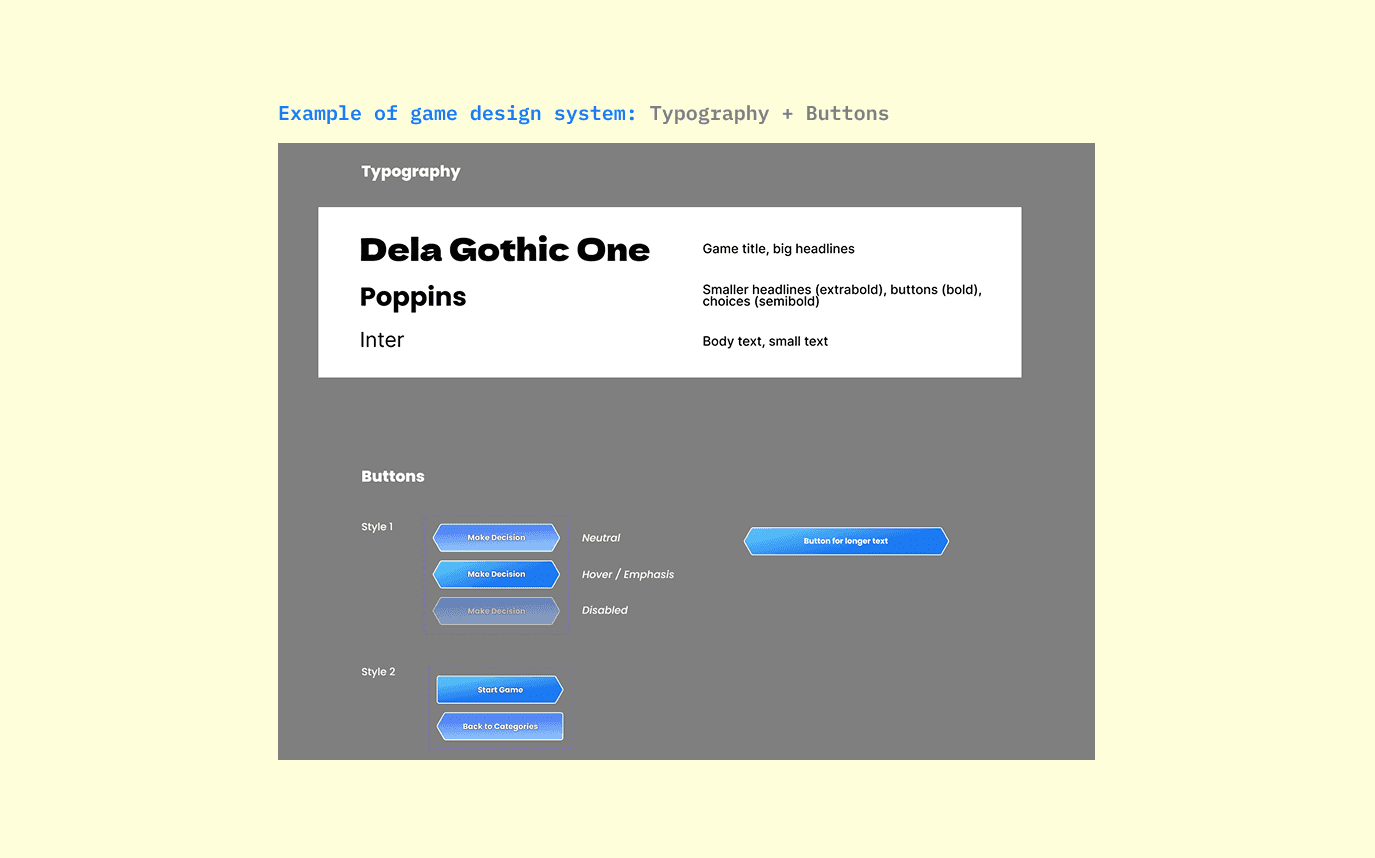
Defined UI visual direction and art style
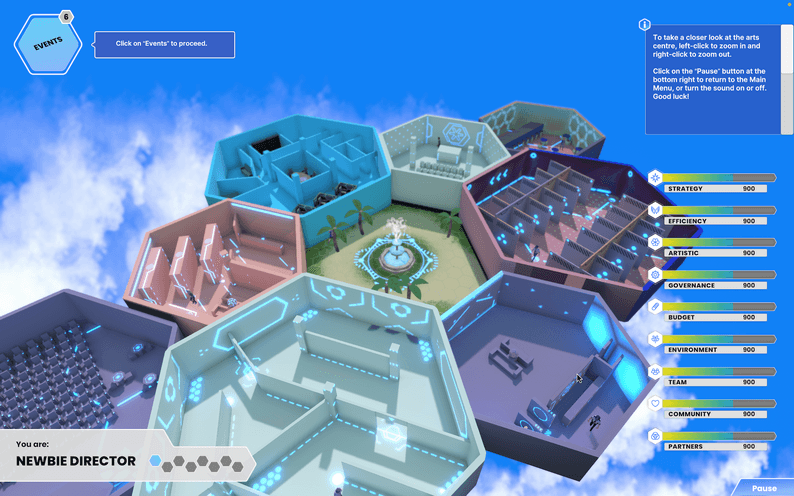
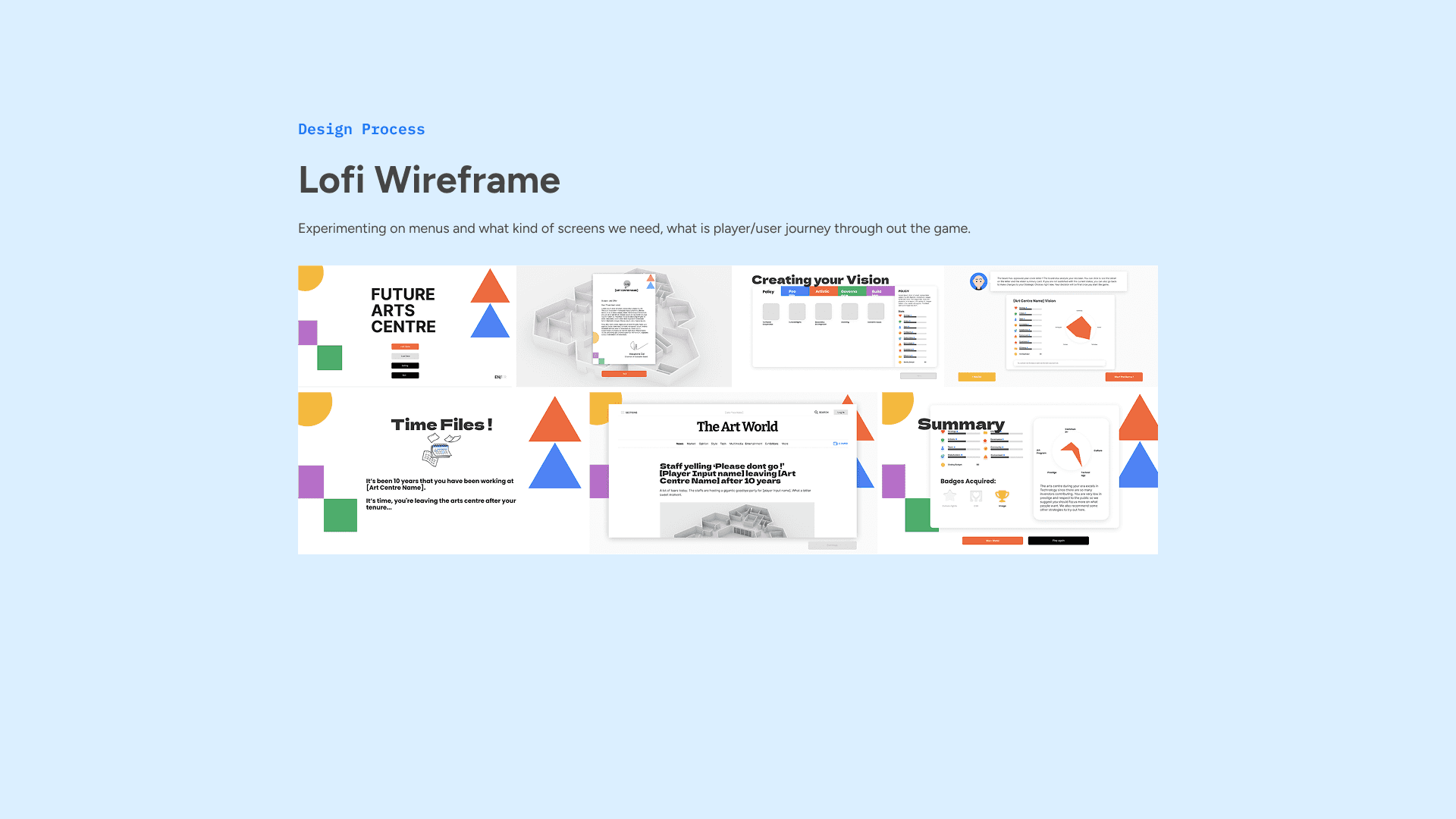
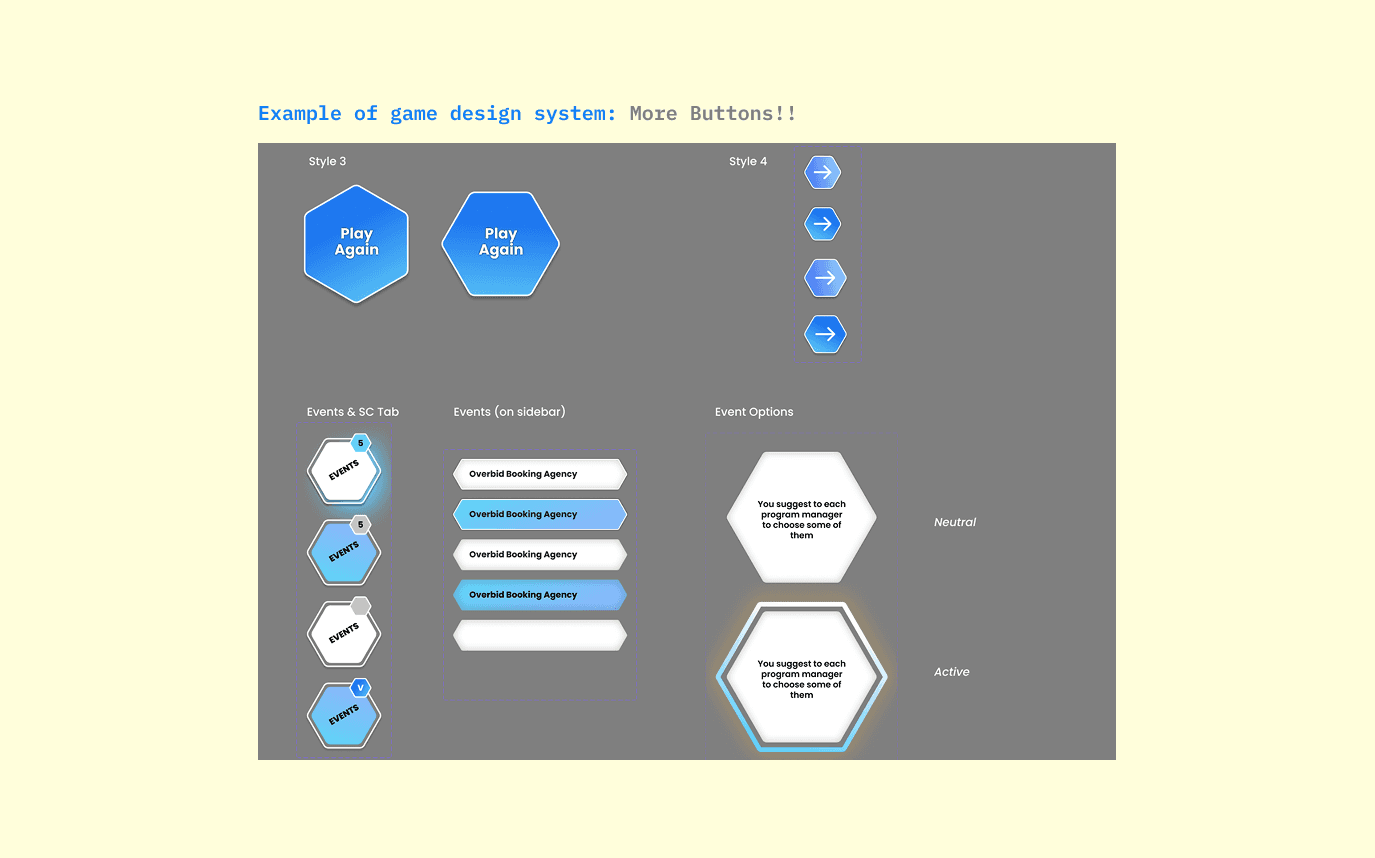
Designed all menu screens, icons, and in-game UI elements
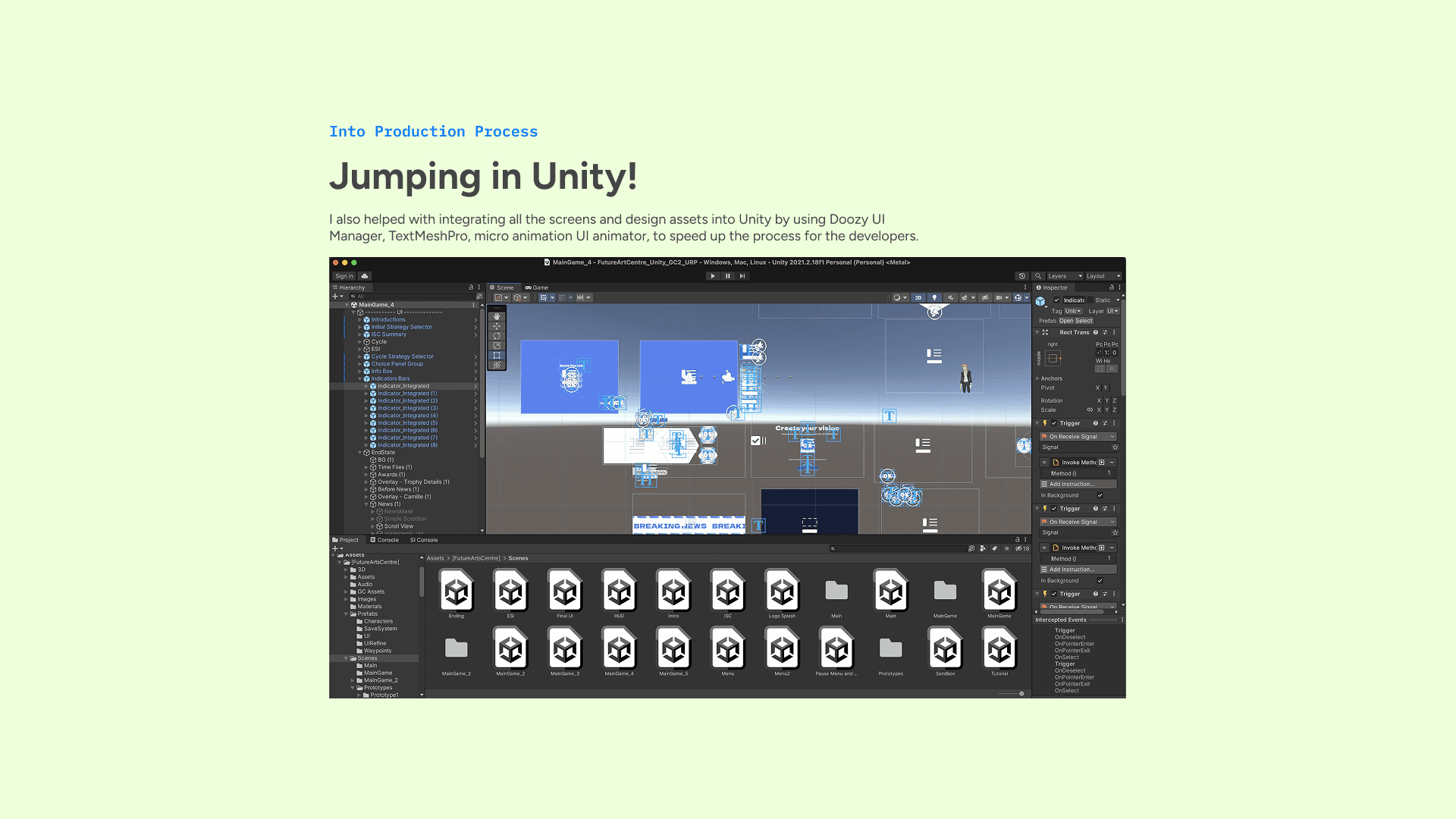
Implemented UI assets in Unity using Doozy UI Manager and TextMeshPro
Created micro-interactions and animations for feedback and progression
Coordinated with developers for smooth integration and iteration
I acted as a bridge between design and development, ensuring visual consistency, functional feasibility, and user-centered interaction design.
🏆 Project Scope / MVP
Visual style and UI direction
Menu, icons, and interactive screens
Unity integration of UI assets
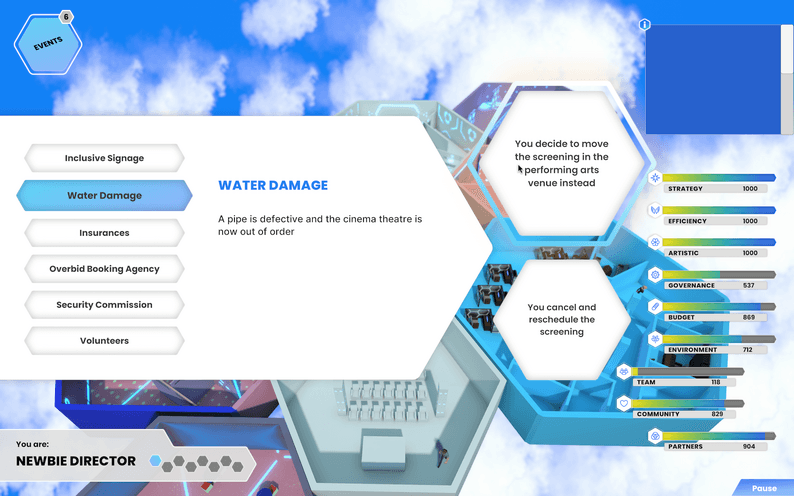
Event-driven system design (main & side events)
Gameplay loop design with Social Impact checkpoints
🎯 Our Solution
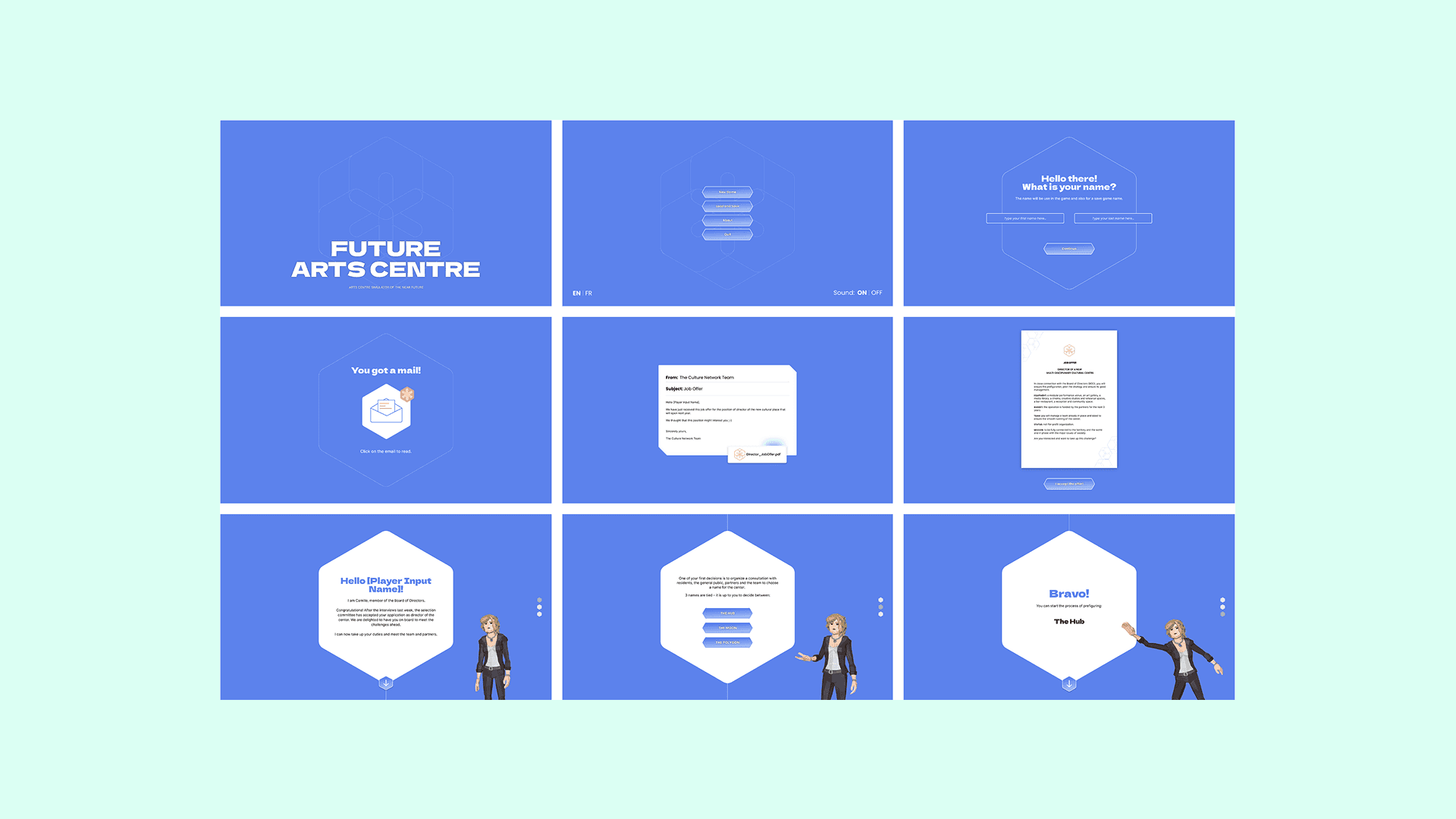
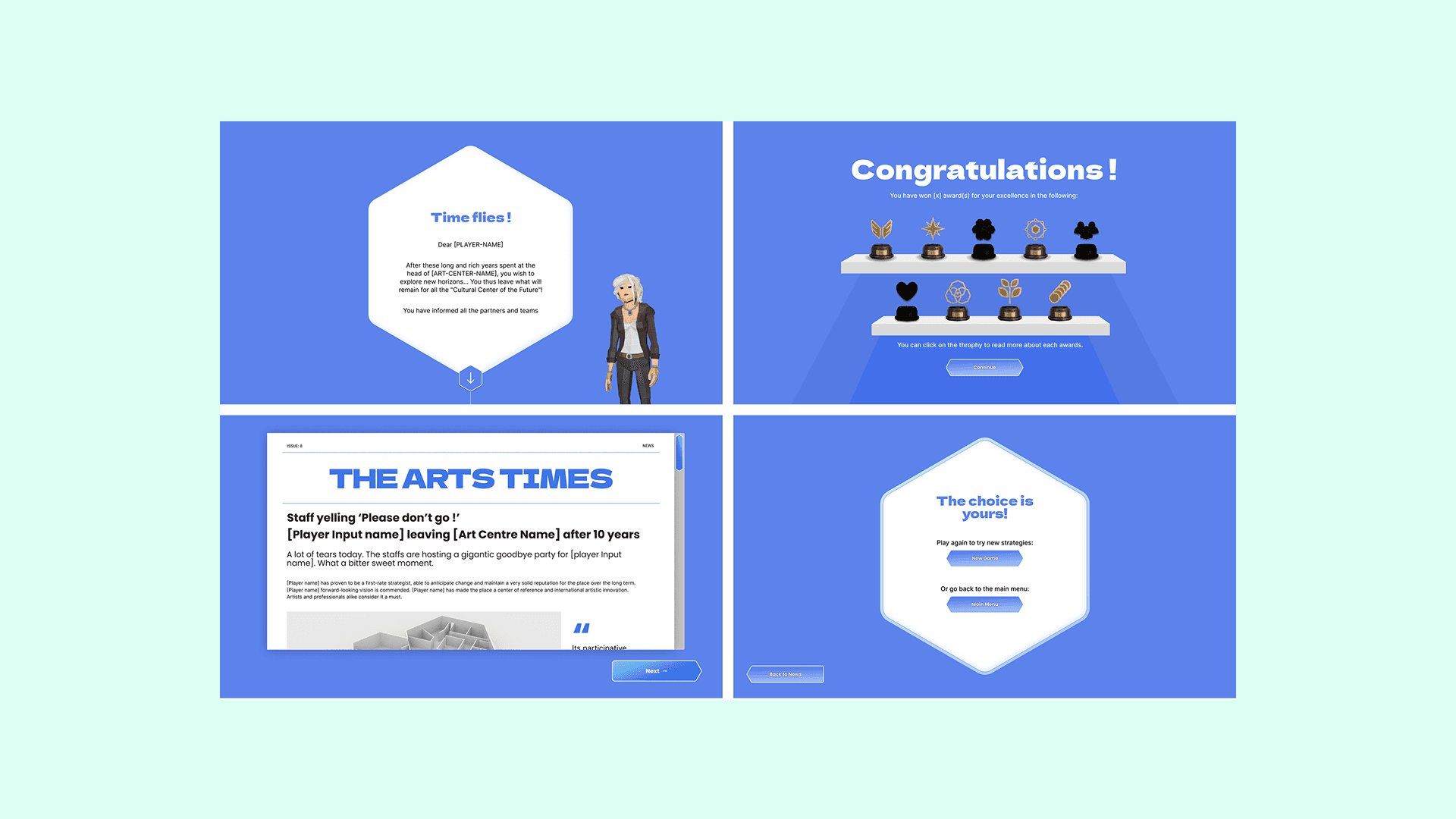
System Flow: Introduction → Initial Strategic Choice → Gameplay Cycle → Ending
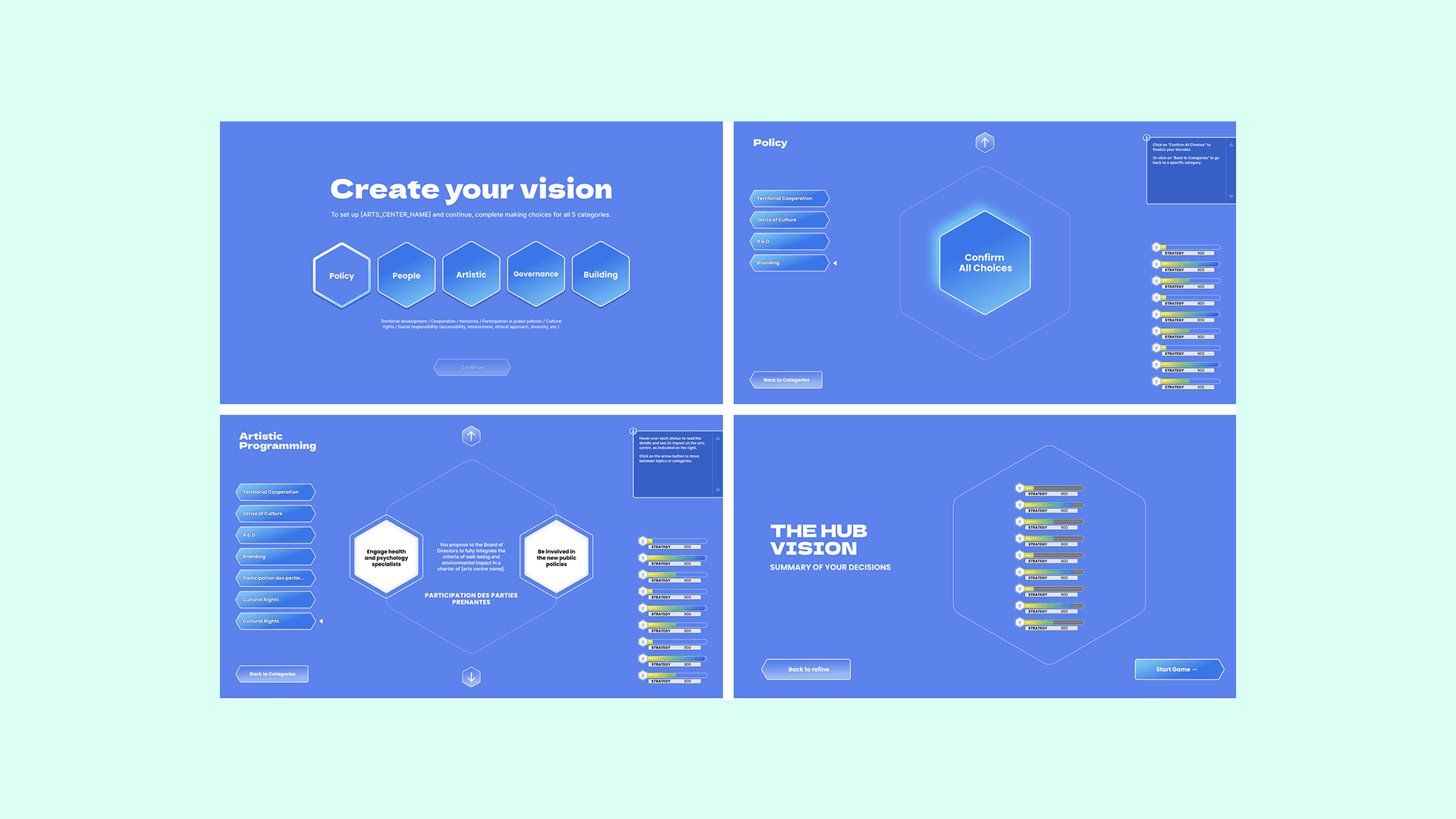
Decision Framework: 5 categories × 5 questions, affecting indicators dynamically
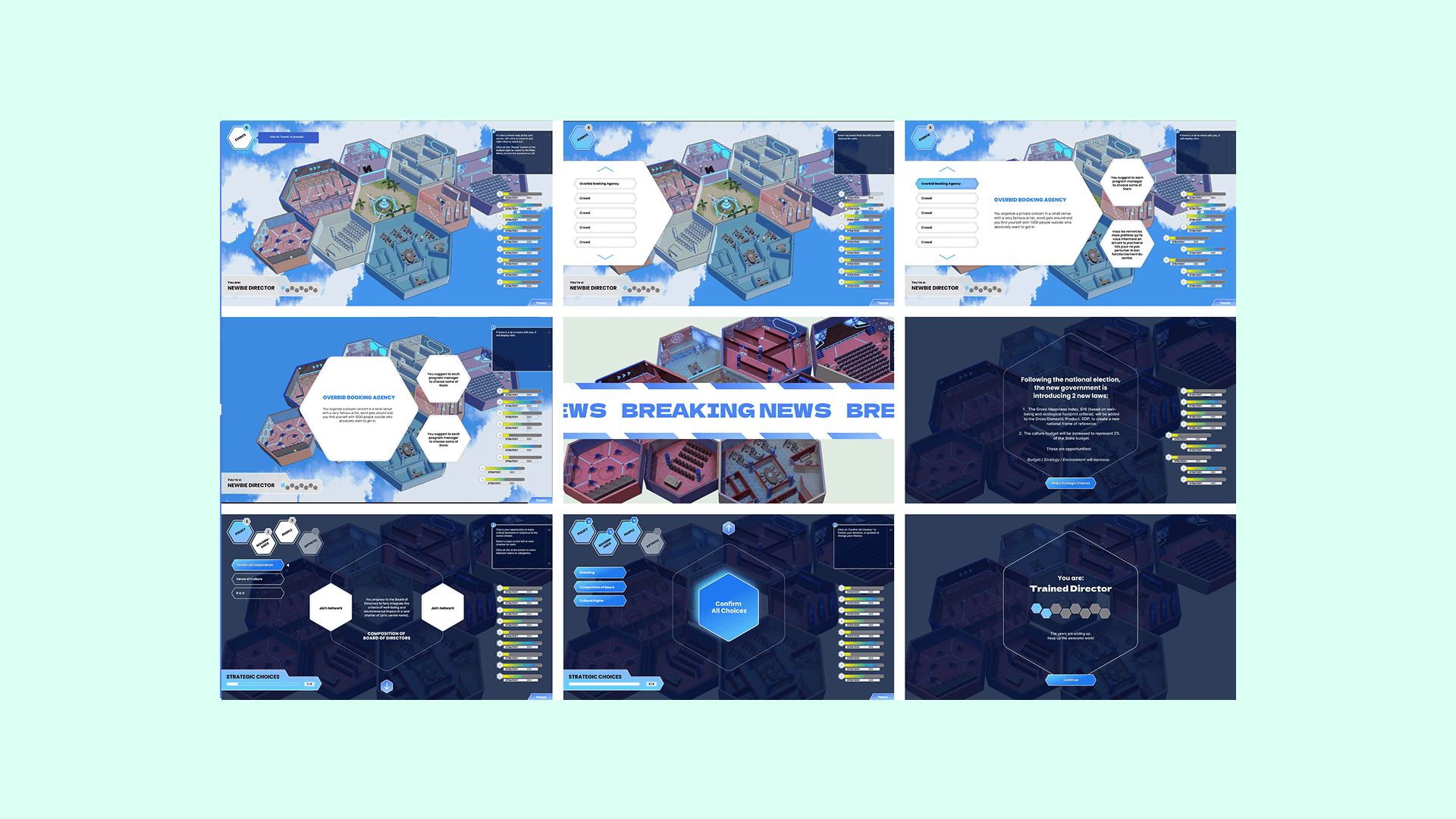
Event System: Main events triggered by decisions, side events by thresholds
Gameplay Loops: 8 cycles with social impact checkpoints for recalibration
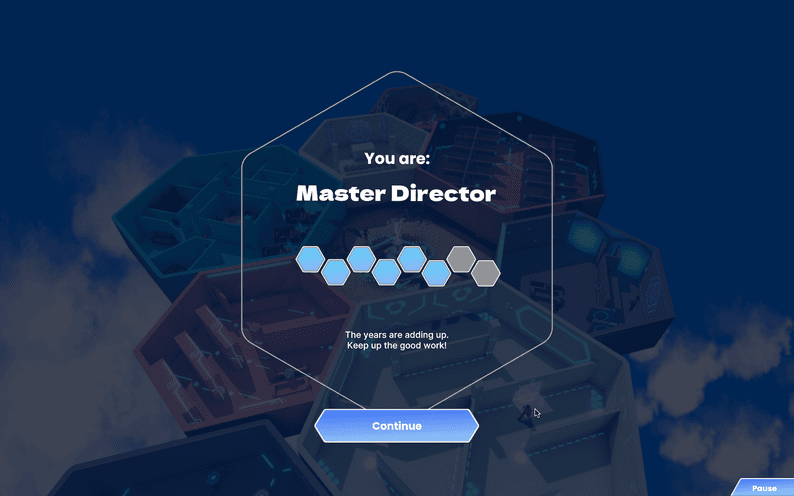
Designed clear feedback states, visual hierarchy, and decision-to-impact transparency
⭐️ Outcome & Impact
Delivered a playable prototype demonstrating decision impact in a cultural simulation
Prototype served as a discussion tool for stakeholders, highlighting potential strategies for arts centre management
Provided a foundation for iterative design and further development in serious games
💡 Key Learnings
At first we tried tackling brainstorming and tasks as a whole group, but it only resulted in long meetings with debates after debates. It worked much better when we divided up the work and put trust in our team members to do what they do the best.
We also waited on the client to get all our content, but we realized later that we could use placeholder text to get on with the development. It was also difficult to lock down the content with minor revisions that kept coming through. So it was a good thing we had an extra week in case we needed more time.
For our team, our developer hosted a Unity workshop for designers and it helps speed up the process. Designers who never used Unity before like me also get to learn how to integrate assets in Unity, and Developers can just hook everything up right after that.
For both our team and clients, English is not our first language so it would be good to align on the same terminology in the beginning to avoid any confusion. It also helps to explain things in simplified terms.
I was a bit afraid to try our own ideas and relied on the client’s approval. If I had more time, I would love to add those extra ideas to make our game even more fun. What the clients need is not necessarily what they ask for, so that’s where we can step in.